
Parenting as Shadow Work
On becoming more whole, even when we'd rather not

I’ve wanted to be a parent for as long as I can remember. As a teenager — I had forgotten this until my father reminded me — I talked about wanting to have children, and I wanted to name one of them Abigail. Abigail is a real human now, 13 years old, with two younger siblings.
Becoming a parent, one has certain ideas in your conscious mind about what it will be like and how to do it well. And then one has a vast storehouse of ideas and mindsets that have not yet seen the light of conscious attention.
I had a few basic ideas going in, which at heart could be summed up, with the naïveté that always defines me: I am good at loving, and resilient, and I will love them no matter what, and that will be enough.
If there was one main companion idea to that, it was that a child is like a seed, with its own innate intelligence, a form of tree it will grow into, and my job was to be a good gardener, to offer good conditions.
And with that I began. One child arrived in 2013, another in 2018, another in 2020, days after the pandemic lockdown began. I fell in love with each of them immediately. I would say at first sight, but I think it was before that.
But in those early years of the pandemic, with the full weight of co-parenting three children at home, I discovered that I had misunderstood something very badly.
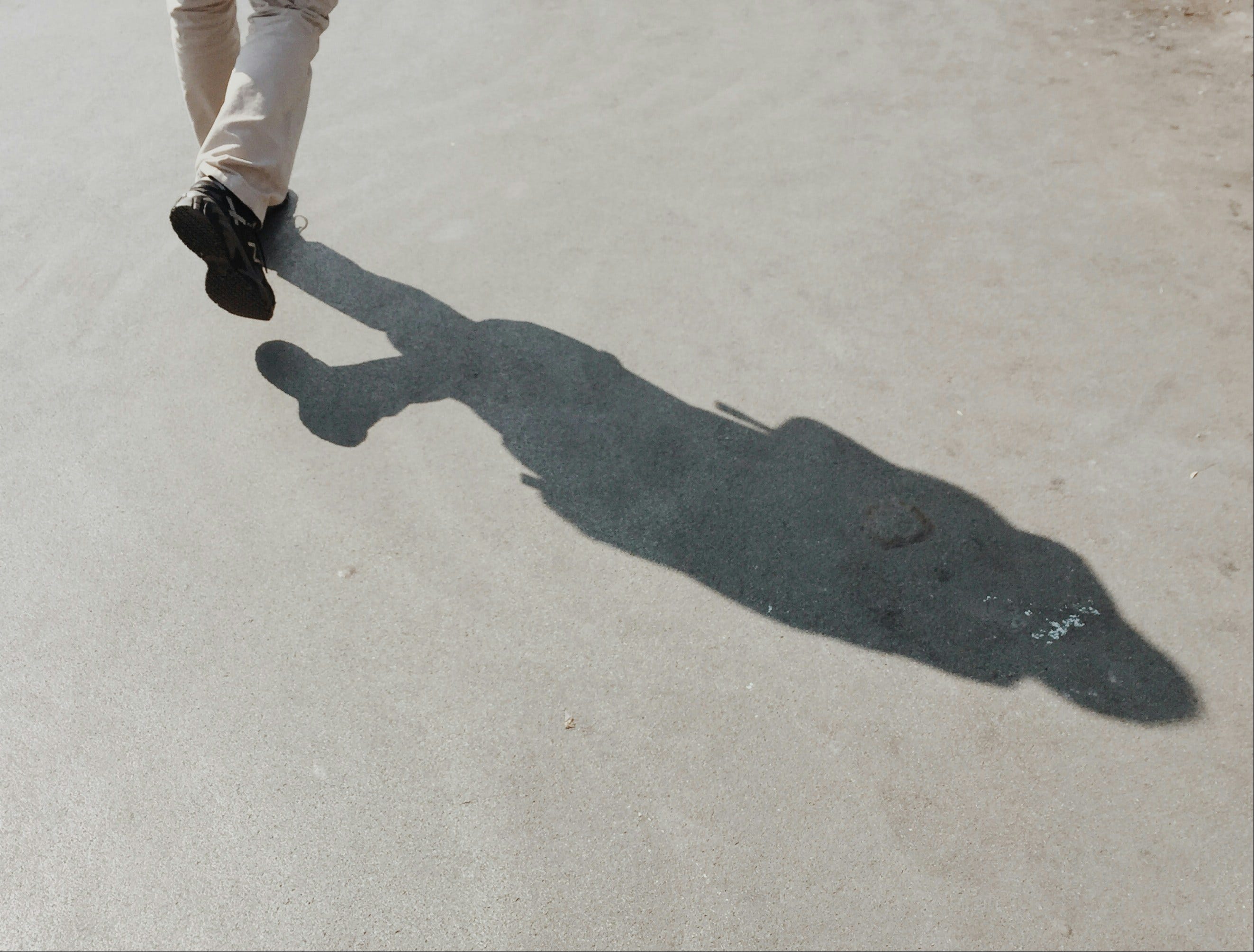
The Shadow Side
I had been focused on the bright side, on positive psychology, on the abundance of love I knew I could tap. I expected that love to grow — and it did. Parenting intensifies every emotion. The amount of love I could now feel stretched me into new shapes. It emerged in unexpected moments, like the deep-in-my-core satisfaction I felt watching one of my kids eat a good meal I had made for them. Who knew that watching someone eat could produce so much happiness?
Yet more troubling, and more able to hold my attention, was how much parenting brought up hard emotions. Overwhelm, particularly when combined with lack of sleep or the sensory over-stimulation of 3 young kids in a small house. Anger. A desire to control them that seemed entirely opposite to my deep belief in supporting autonomy. The difficulty feeling playful and open again after an intense tantrum, despite my kids being immediately ready to play once their emotions had cleared.
I realized, more vividly than anything I had learned from studying psychology, that I had pushed down a whole range of emotions, ones I had somehow labeled as not desirable, not allowed to be part of me. But of course they were still part of me. In pushing them down, I had not removed them from my psyche. As someone once described it to me, when you exile part of yourself into the basement, it waits there lifting weights and getting stronger until it’s ready to burst back into your awareness.
That’s the shadow self. And in approaching parenting, full of good hopes and intentions, I had been secretly exiling large parts of myself into the basement. Anger, selfishness, frustration, jealousy — all of those parts had been kicked unceremoniously down the stairs. As if I could get rid of them so easily, or at all.
That shadow self was working out around the clock, waiting for the right moments to emerge from the basement. And parenting provides many of those right moments. I even think that kids instinctually find ways to open the basement door, seeking to understand more fully, or be in the most possible contact with their parents. So there we were, in full early-childhood-parenting glory, my wife and I trying to hold down full-time employment while taking care of 3 intense young beings, one of whom patently did not like to sleep. I was a mess.
I found that not only did I get flooded with anger and frustration, but then what Buddhists call the “second arrow” would hit. If the first arrow was the pain of the unpleasant emotions and situations, the second arrow is the self-judgment I had about it. The shame and disappointment in myself for allowing that angry and grouchy version of me to exist. As if I could stay in the light all the time.
So eventually, I realized — and am still realizing — that in order to be the kind of parent I set out to be, one resilient enough to let love flow at all times, I would need to work with these shadows. To bring them up out of the basement.
I realized that parenting is shadow work.
Dancing with the Shadow
My first impulse is usually to toss the shadow self back into the basement. When anger or frustration emerges, I want to yell it back down. When that fails, my next impulse is to remove myself. Go take a walk until I’m back to being warm and loving. That works here and there, but with a partner who is equally tired and facing the needs of three children, taking numerous walks is not a great strategy. There is a difference between resetting oneself and reflexively hiding when upset.
It turns out that I have to dance with the shadow. And in full view of others, forcing me to stop pretending that the shadow does not exist. Ouch.

What would it be like to allow these unpleasant emotions to exist, let alone to be danced with?
As is so often the case, a poem by Rumi captures the possibility of this better than I ever could:
The Guesthouse
By Rumi, translated by Coleman Barks
This being human is a guest house.
Every morning a new arrival.A joy, a depression, a meanness,
some momentary awareness comes
as an unexpected visitor.Welcome and entertain them all!
Even if they’re a crowd of sorrows,
who violently sweep your house
empty of its furniture,
still, treat each guest honorably.
He may be clearing you out
for some new delight.The dark thought, the shame, the malice,
meet them at the door laughing,
and invite them in.Be grateful for whoever comes,
because each has been sent
as a guide from beyond.
Could I let these sharp edges of parenthood into the house, let them re-arrange the furniture, even expect that they are clearing me out for some “new delight?”
Once in a while, I see a way toward this vision. Once in a while, I look at the shadow with genuine curiosity. Even a bit of wonder. For two reasons.
First: your shadow is a time traveler. After all, it’s a curious fact that our early experiences are lost to childhood amnesia, to that seeming over-writing of our memories as our brain develops. Yet don’t you notice, when parenting, that your own parents sometimes speak through your mouth? This is a clue not to be ignored. A chance to see more clearly into those forgotten, formative zones of our own childhood. To understand our own parents, hopefully in a light of forgiveness, much as we hope for ourselves.
Second: your shadow has life force. Your life force. This is precisely why we’re scared of it: the anger that can emerge, the intense frustration, is powerfully energized. If you somehow succeed in pushing it down, repressing it a bit longer, you are repressing your own energy. You become less alive. When you dance with it, there is vitality there waiting for you.
I think of it a bit like the classic couples-therapy advice: don’t avoid conflict, do conflict better. Don’t avoid dancing with the shadow self. Learn how to dance better. I know it’s easier said than done. But I don’t see a better path toward growth. And trust me, I’ve already tried avoiding it.
To make this a little clearer, here are some possible dance steps to try, offered not because I’ve mastered them, but because I’m trying to live into them myself:
Ask yourself, where is your shadow appearing in your parenting, or for those who are educators, in your teaching? Which parts, emotions, impulses within yourself do you reject and disown?
If only as a brief, safe thought experiment, ask yourself, what are those parts trying to say? Notice how much life force and vitality is in their response. Are there ways you could honor these impulses, without losing yourself in them? In the spirit of don’t avoid conflict, do conflict better?
If there is even a ‘maybe’ to that previous question, how could you let some of that shadow self exist, in real conscious life, in service to something that matters? It may seem hard to believe that being grouchy and frustrated, for example, are in service to something valuable. But maybe that’s the energy you need to say “enough of this! we need to do ______, this is driving me insane”, or to change something about how your household works, or to defend a value that feels genuinely important for your family.
By allowing the shadow to move through you, re-arranging your furniture as Rumi might say, how can you come back home sooner? In other words, can you do what children often model beautifully: let intense emotions (anger, tears, jealousy, etc) course through them, and then when it’s over, become ready for connection, play, and laughter all over again? Almost as if nothing happened?
Of course, I am not saying that one should be angry and grouchy on purpose, or hold those up as parenting virtues. I’m trying to say that there is value and vitality in understanding what those emotions are saying to us, even while we may not act on them. Or we may act on them after reflecting, talking to a partner or friend, grounding ourselves first.
Here’s a quick example. In those hard early pandemic years, my wife and I let our kids have way more screen time than we thought was ideal. We were exhausted and the screens were too good at buying us time to rest or tend to another child’s need. But by the time the exhaustion finally lifted a bit, and our youngest one began to sleep well, we had built up a dangerous habit. Our kids were always asking for more screentime, and would — predictably — get so sucked into it that they ignored their own bodily needs, exploding with anger and big emotions as soon as screentime was over.
At first we felt terrified to change this, afraid that pulling the iPads away would bring us back to the even harder, tantrum-filled months that had so exhausted us. We tried to tweak the rules, cajole, negotiate, etc. It didn’t work. I noticed in myself a growing anger — like I had given up my own autonomy to the screens, and was letting their power set the norms in our family. Finally, one night, I had enough. I called a family meeting over dinner and said, in a deeply heartfelt way, that I had reached my limit. That the way we were using screens was rotting our brains, and that we were going to take a break.
I was fired up enough, the heat of the anger in me was strong enough, that I was willing to go through total war. But amazingly, the kids didn’t disagree. I think perhaps they felt in contact with me. I wasn’t yelling or scary, as far as I can tell, but I felt very clearly and strongly about a growing habit that was harming us. I think that the energy of that convinced them. In the weeks that followed, screentime went to almost zero, and my wife and I were stunned at how little the subject came up. They believed me — a more unified me, the bright self and the shadow self, than perhaps they usually saw.
I know this is not easy work. It is frequently scary, even maddening. But it’s the work we have ahead of us. Who among us knew, when we made that decision to become a parent, that we were signing up for the world’s most intense course in shadow work? No doubt some of you were wiser than I, and anticipated this. But for those who are surprised by the intensity, like me, I offer you this. Maybe — maybe — the shadow work is a feature, not a flaw. Maybe it’s the opportunity we need to grow in some of the deepest and hardest ways. Maybe it’s what we do to ultimately serve our kids best.

Good stuff. I've recently been challenged to identify and embrace my shadow sides. Tell you more in person!
I love your writing & reflections so much, Chris! When we did ON BOYS podcast, Janet & I used to often say that parenting is personal development on steroids. We start out thinking we're raising children and we're all focused on what we need to get them to do....and so often, what we really need to do it deal with OURSELVES and that's always the hardest part. I so love this line that you wrote - " I even think that kids instinctually find ways to open the basement door, seeking to understand more fully, or be in the most possible contact with their parents." That's one I'm going to be pondering for a long time.
My kids are now grown but this dancing with the shadow self is something I'm still working on, still learning. I think I'm going to print off that Rumi poem & put it somewhere I can see it frequently.